


As a pioneer in the export of agricultural products with over 28 years of experience, Nafoods has always been proactive in seeking new markets to expand its market share and increase revenue for the corporation. For a long time, we have targeted the Muslim customer market, so the products of the enterprise must have Halal certification.
To obtain certification, products must have ingredients, production components, and production line conditions that meet the Halal standards. The Halal certification is like a passport for export businesses to enter countries in the Middle East region and some countries in Europe. The potential of this market is enormous, so Nafoods has quickly researched the market and adapted to meet Halal standards, initially grasping the key to conquering the “billion-dollar market”. Thanks to careful preparation, Nafoods Group is one of the first companies in Vietnam to step into this market and has built a reputation for the brand over many years with many strategic partners.
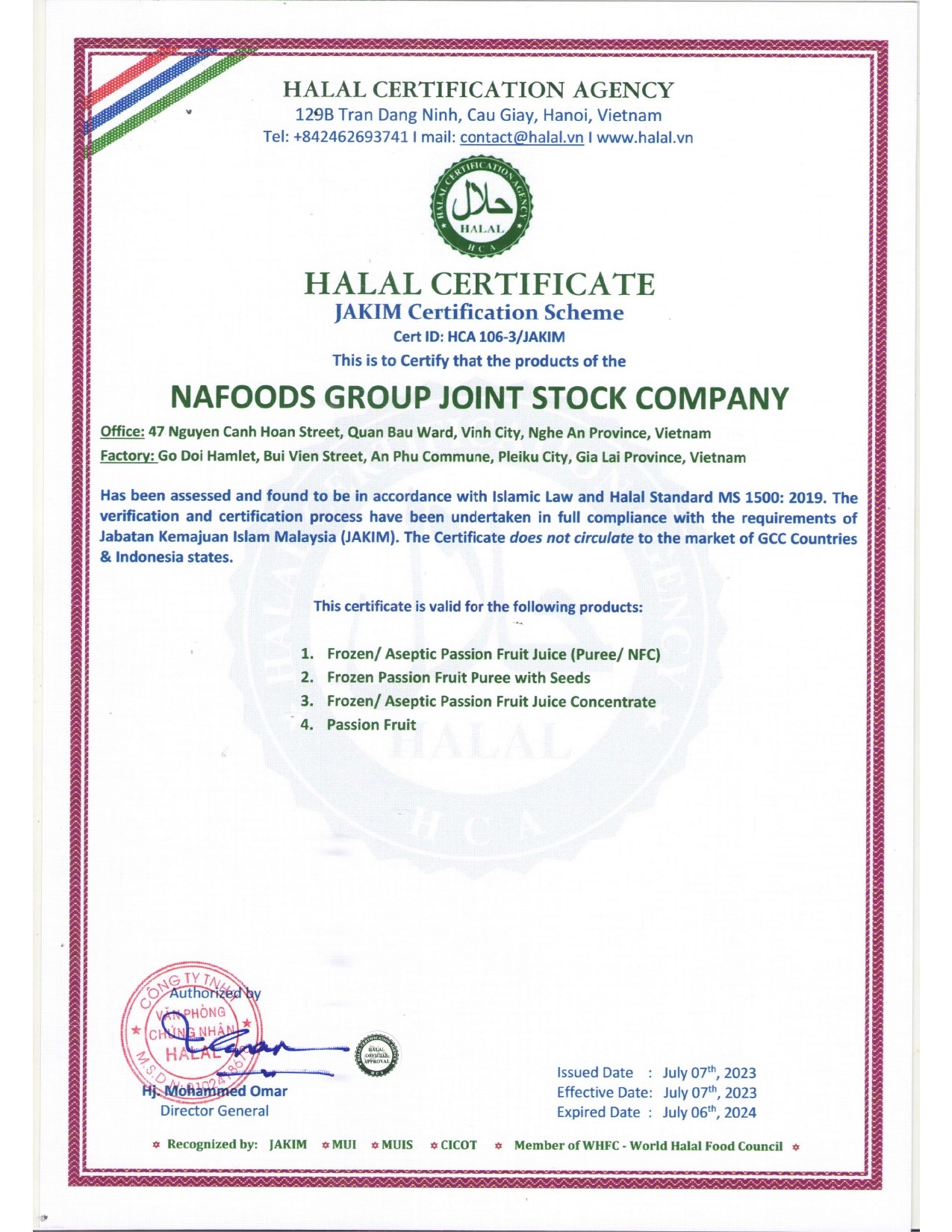
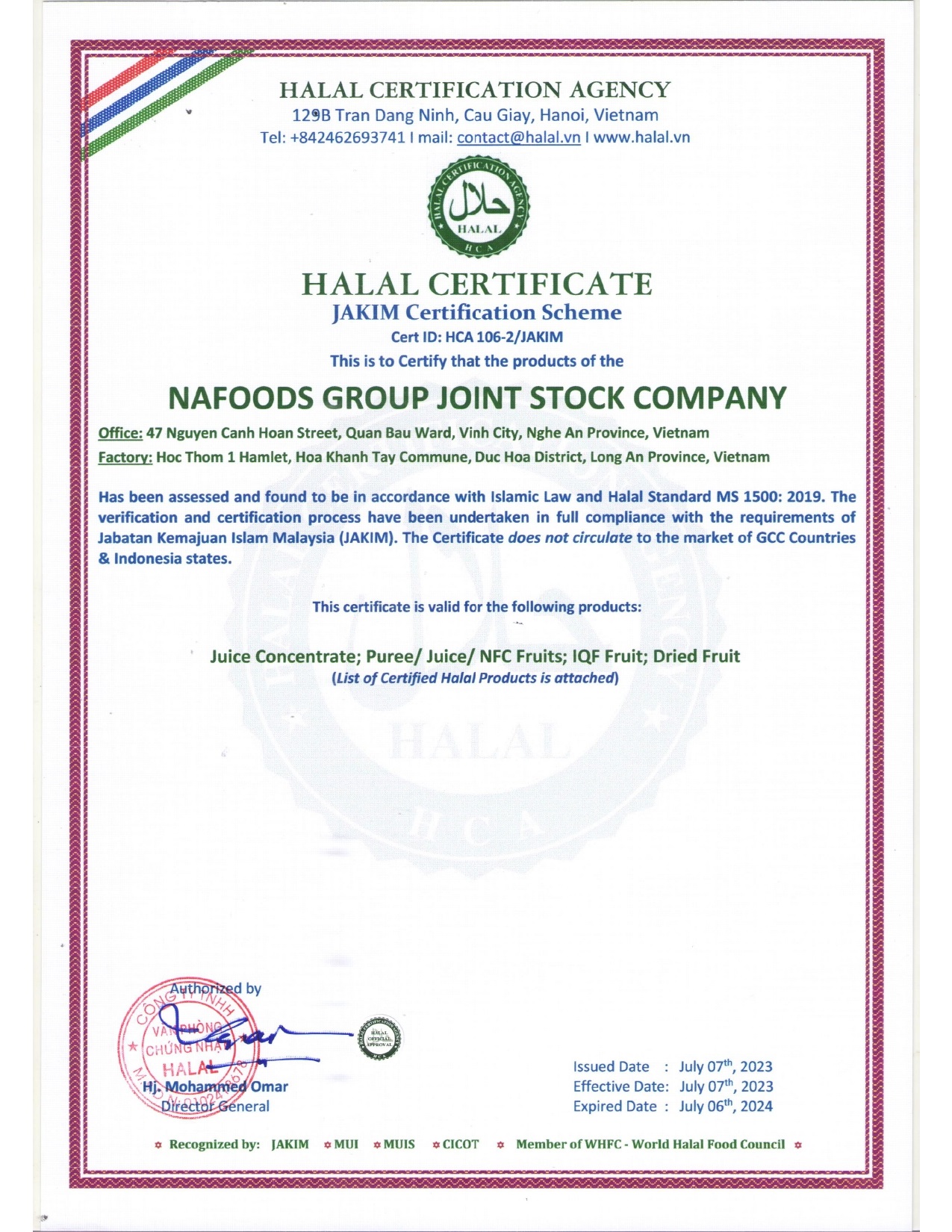
According to Ms. Ho Thi Loan – Director of Industrial Sales at Nafoods Group, products certified as Halal are a mandatory requirement for the Muslim customer market. Understanding more deeply, Muslims have their own standards in beliefs that affect their food choices. Halal standards dictate that food products must be produced safely and ensure quality, with no ingredients prohibited by Islamic law, such as pork. In Islamic terms, Halal means “permissible,” so products without this certification are absolutely not chosen by Muslims.
Nafoods has identified the target customers and thoroughly researched the Halal standards since the early days of expanding its business operations and targeting this customer group. With many years of experience in exporting products from Vietnamese agricultural products, Nafoods’ preparation work has many advantages in converting production processes to meet Halal standards.

According to Ms. Ho Thi Loan – Director of Industrial Business at Nafoods Group, when considering product categories or markets, there are both advantages and some difficulties in applying this standard. For instance, products such as fruit juices, frozen IQF fruits, pure fruit juices (Puree), and ingredients without “Haram,” meaning forbidden, and produced under quality-assured processes can easily obtain Halal certification. However, for products like dried fruits or canned fruits that use additional ingredients like sugar, quality assessment will be more rigorous. The sugar used in processing products must have Halal certification, provided by reputable suppliers. Additionally, the production process must be closely monitored and evaluated. Adjustments to the production process may be necessary to ensure food safety hygiene according to Halal standards.
Regarding the advantages of obtaining Halal certification, Ms. Loan noted that the Muslim market currently accounts for 25% of the world’s population and is projected to increase to 30% by 2024. This market is considered promising, offering many opportunities for Nafoods to expand and continue to assert its position as a longstanding export enterprise. Since adopting Halal standards, it has not only applied to products distributed in Muslim markets but has also become one of the key standards in Nafoods’ food safety management system for many years.
Customers are increasingly interested in health issues, so safe products with clear origins are trusted more. Especially, products with Halal certification are always preferred by customers.
Muslims currently account for about a quarter of the world’s population, projected to reach 30% by 2024 and 2.2 billion people by 2030. It is estimated that the global Halal market will generate $5 trillion USD annually and continue to grow, opening significant opportunities for Vietnamese businesses to penetrate this market. By 2025, Halal-certified food is expected to account for 20% of the total global food consumption value. Therefore, with its existing advantages, the export potential of Vietnamese enterprises like Nafoods Group to Muslim countries is enormous. However, this is also a very demanding market with a system of strict standards requiring businesses to be prepared and strong enough to meet Halal standards. Obtaining Halal certification also means that the enterprise holds the ticket when exporting food products to the Muslim customer market.